Student login:

Certified Peer Specialist (CPS)

This 65-hour training prepares individuals for the Certified Peer Specialist role. It’s intended for those with prior peer support experience and focuses on using personal stories of recovery to inspire hope and promote self-determined healing within the community and service system.

Course description

Many people who have lived through emotional distress, trauma, or mental health lived experience want to use their experience to support others—but may not know how to take that step. The Certified Peer Specialist (CPS) training helps turn lived experience into professional peer support that makes a real impact. This gold standard CPS training is carefully curated and designed for review and curriculum analysis by our funders, board members and multiple stakeholders.

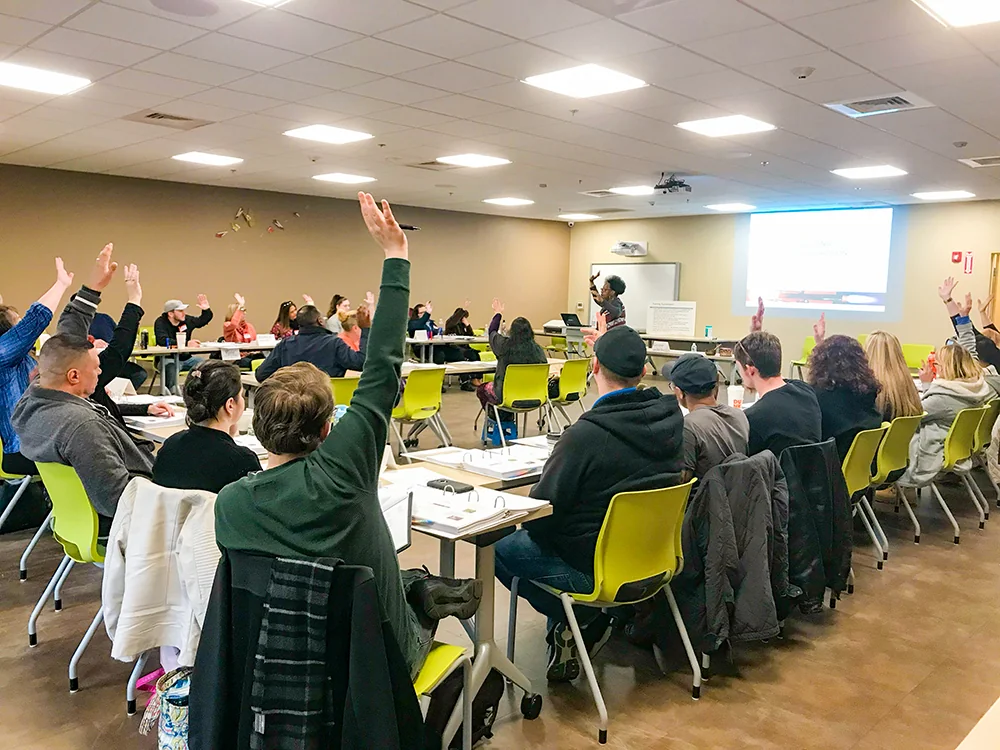
This is a rigorous, advanced training designed for individuals who already have a foundation in peer support. Through 24+ interactive modules, small group work, and guided assignments, participants learn how to use their own story to foster hope and healing in others—while honoring the principle that healing is a self-determined process.

The primary purpose of the CPS program is to help build a peer workforce in Massachusetts. The training is designed to enhance the tools used by people who already have experience in peer support and the mental health recovery movement. Students bring their lived experience to class and learn how to use their story and skills to assist people receiving services as well as service providers. CPSs are the evidence that recovery is real.

Kiva Centers is the only organization in the Commonwealth of Massachusetts authorized to provide this training. Upon completion, participants are eligible to sit for the state-recognized certification exam to become a Certified Peer Specialist.

Graduates go on to serve in community and service system roles where lived experience is valued as expertise—bringing insight, connection, and inspiration to the people and systems they work with.

Some subjects covered in training include

  • The Three Core Competencies: 1) Peer Support, 2) “In” but not “Of” the System, 3) Change Agent
  • Peer Support, Mutual, Survivor Movement History
  • Advanced Fundamentals of Peer Support
  • Human Experience Language
  • Cross-Cultural Partnering
  • Fear: Friend and Foe
  • Group Facilitation and Self-Help Tools
  • Power, Conflict and Integrity
  • Creating the Life One Wants

Eligibility requirements

  • 18 years of age or older
  • Live or work in Massachusetts
  • High School Diploma or equivalent (GED, HiSET, etc)
  • Have your own lived experience with significant life impacts like trauma, receiving a mental health diagnosis.
  • Willingness to share your own mental health recovery story in the context of peer support

CPS success factors

The application process considers the following as success factors for CPS training and in the CPS role:

  • Demonstrates a foundation of knowledge and experience in mental health peer support relationships and understands the peer specialist role in the mental health system.
  • Has basic knowledge about the differences between a maintenance-based mental health system and one that is recovery-oriented.
  • Has knowledge of self-healing process through personal lived experience in mental health and experience with leadership, advocacy, or other mental health peer support.
  • Is committed to completing the CPS course, taking the CPS exam, and working as a CPS in mental health and other service systems.
  • It is helpful to have completed at least two peer trainings before taking the CPS course. If you’ve had peer support experiences that are not listed in the application, you may explain these in your interview.
  • You are encouraged to complete the CPS Self-Assessment.

Preparing for the CPS program

There are many resources available that will help you assess your skills in one-on-one and group peer support settings so you may become an agent for change and share your story (links below):

CPS Self-Assessment | Code of Ethics


Tips on references

Two references are required. 

  • Two references are required.
  • It’s recommended to request your references as soon as you receive the reference email.
  • You may request more than two references to ensure at least two are completed no later than 2 business days before your interview.
  • Family members and treatment providers cannot provide references.
  • References should come from people who can speak to your ability to form peer connections and provide mutual support, such as:
    • People you have given peer support to
    • Employers or supervisors
    • Educators
    • Volunteers or colleagues
  • At least one reference must be from a Certified Peer Specialist (CPS).
  • References are completed via an online survey (6 quick questions) — the link you’ll receive includes all instructions and can be previewed before sending.
  • Once the referee submits the survey, it is automatically sent to the system.
  • Do not send references by email or mail; only use the provided survey link.
Forward the “reference email” to two people who can provide a reference for you. References from family members or service providers will not be accepted, and at least one of your references should be from a Certified Peer Specialist (CPS). You will receive confirmation emails when each reference is completed on your behalf.”

Frequently asked questions

What is a Certified Peer Specialist?

A Certified Peer Specialist (CPS) is a trained professional who uses their lived experience of mental health recovery, resilience, and healing to inspire hope, optimism, and courage. CPSs support individuals in building and strengthening their own unique pathways in life across a variety of settings, including inpatient units, emergency services, respite, community health and outreach programs, prevention initiatives,  Recovery Learning Communities (RLCs) and etc..

By openly sharing their experiences, CPSs positively influence people receiving services, mental health professionals, policymakers, and others. CPSc support transforming beliefs about recovery, demonstrating that healing and growth are possible for all.

How does one become a CPS?

In Massachusetts, you become a Certified Peer Specialist when you complete the CPS training and pass the certification exam.

Who is eligible to apply for the CPS program?

Applicants to the CPS Training Program need to:

  • Have lived experience of a mental health condition or emotional distress or trauma resulting in significant life disruption
  • Be willing to share aspects of that experience as part of their work as a CPS
  • Be 18 years old or older
  • Have a High School Diploma or equivalent (GED, HiSET, etc.)
  • Live or work in Massachusetts
How long does the course take?

The number of weeks the course takes depends on the format of the class you are applying for. Most courses take between 4-10 weeks. The course itself is 65 hours.

Is there a cost to complete the program?

There is no cost for training, exams, or materials for participants, nor for the agencies they are affiliated with. The CPS Program is fully funded by the Massachusetts Department of Mental Health.

Do I have to be at every class?

Yes, attendance is mandatory for the completion of the training.

Will homework be assigned?

Yes. Students are expected to complete homework, assignments, and practice exams. They must also read all course materials and create their own study guide throughout the training.

How do I request a reasonable accommodation?

Reasonable accommodations under the Americans with Disabilities Act (ADA) for testing are available for students who meet the requirements. The CPS Team will provide clear instructions—both in writing and verbally—throughout the course on how to request testing accommodations.

How do I know if I am ready for CPS training?

A great way to assess your readiness is to participate in the Peer Workforce Foundations workshop, offered at no cost throughout the year. Additionally, reviewing the CPS Self-Assessment on our website can help candidates understand the key factors for success in the CPS course.

What can help me feel more ready for the training?

Any activities that build a foundation in your personal recovery and in supporting others in their recovery can be helpful. Involvement in a local RLC, participation in a WRAP training, becoming a member of a peer support group, and reading about recovery can also support your readiness.

I haven't gone to school in a long time, can I pass the exam?

Many CPS participants have not been in school for some time. To support them, we provide study tips and a module called “Learning to Learn,” which helps students create a study plan for the test. We also offer two office hours sessions outside of class to answer specific curriculum questions and provide guidance on study guides. From the beginning of the course, we give tips on how students can start creating their own study guides and support the formation of student-led study groups.

Do I have to become certified to get a peer support job?

Often, a person may be hired before becoming certified, with the expectation that they will complete the training and earn certification within the first six months to one year of employment. However, a few agencies do require certification beforehand. Agencies establish these standards themselves.

Do I need to be trained as a CPS to give peer support?

No. Peer Support relationships change lives and foster self-healing anywhere that people seek and give support based on shared experiences. There are far more opportunities and places to offer peer support than there are paid roles for Certified Peer Specialists. Peer support happens informally and in paid and volunteer roles that do not require CPS training and certification. Peer support training is offered through a variety of organizations for people with or without experience with peer support; many provide a certificate of completion or offer their own certification program, for example, Regional Recovery Learning Communities (RLCs) who offer a variety of peer support trainings.

Where do I find other peer-led trainings and workshops?

Kiva Center offers peer-led trainings and workshops, which can be found on our website under the Training tab or the Certified Peer Specialist tab. Some of these trainings are offered through peer-run agencies, while others can be found through online searches.

Upcoming Trainings

Spring 2026 Certification Training

Applications open: February 2, 2026
Applications close: February 16, 2026
Session details

Tuesdays and Thursdays Online via Zoom

March 31, April 7, 9, 14, 16, 21, 23, 28, 30, May 5, 7

To apply, read the entire page carefully, then click the “Apply Here” button at the bottom of the page.

Past Trainings

past training

Summer 2025 Certification Training

Applications for this training are closed.

(Tuesdays & Thursdays Online via Zoom)
June 10, 12, 17, 24, 26, July 1, 3, 8, 10, 15, 17

past training

Spring 2025 Certification Training

Applications for this training are closed.

(Tuesdays & Thursdays Online via Zoom)
April 28, 29, May, 1, 6, 8, 13, 15, 20, 22, 29, June 3

past training

Spring 2025 Certification Training

Applications for this training are closed.

(Mondays & Wednesdays In-Person Berkshire Area)
April 28, 30 – May 5, 7, 12, 14, 19, 21, 28 – June 2, 3

past training

Winter 2026 Certification Training

Applications for this training are closed.
Applications opened: November 3, 2025
Applications closed: November 17, 2025

Tuesdays and Thursdays Online via Zoom

December 30, January 6, 8, 13, 15, 20, 22, 27, 29, February 3, 5

past training

Fall 2025 Certification Training

Applications for this training are closed.
Applications opened: June 26, 2025
Applications closed: July 10, 2025

Tuesdays and Thursdays Hybrid Course

September 2, 16, 18, 23, 25, 30 October 2, 7, 9, 14, and 16

Some components of the course will be Online via Zoom and there will be mandatory in-person requirements in the different catchment areas as well.

Need to reach us?

CPS Admin Team
206 Southbridge Street, Door 2
Auburn MA 01501

Contact us at cps@kivacenters.org
or call 508-751-9603

Apply to become a Certified Peer Specialist

3-Step application process

  1.  Complete your application by clicking the button below. After you submit the application, you will get an email from “The Kiva Centers” with a link to schedule an interview. (Check your spam file if you do not receive a confirmation email.)
  2. Schedule your interview –From the email confirmation (stated above) click the link to schedule your interview.  After you schedule your interview, you will get an email from “The Kiva Centers” with a confirmation of your interview date and an email to forward to 2 individuals who can give you a reference. For more information on who to use as a reference, review the “Tips on references” section above. If you do not see your confirmation email, check your SPAM folder.
  3. Forward the “reference email” — to two people who will give you a professional reference.
    for the training. References from family members, or service providers detailing your treatment plan will not be accepted. You will recieve confirmation emails when someone completes a reference on your behalf.